Does Searing Meat Seal in the Juices? The Kitchen Myth That Won’t Die
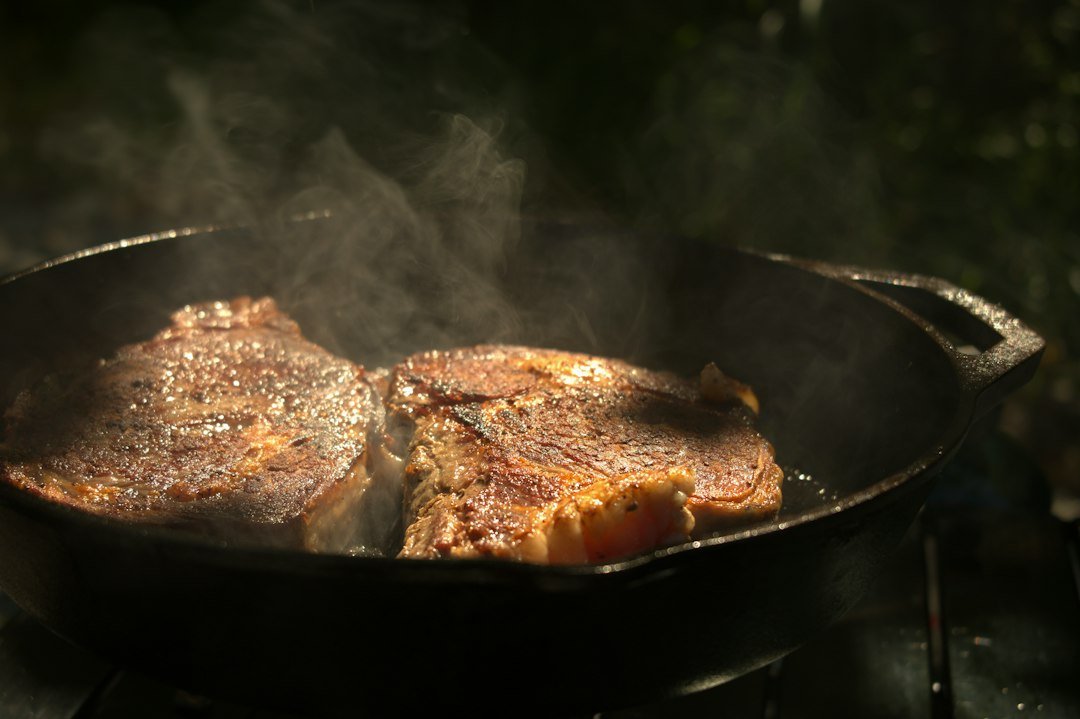
“Sear it to seal in the juices.” It sounds sensible, it has been repeated by generations of cooks, and it is wrong. A good crust is worth chasing, but the pan is not shrink-wrapping your steak.
What searing really does
When the surface of meat gets hot and dry enough, the Maillard reaction creates hundreds of flavour compounds and that deeply browned crust. It is the same broad family of chemistry that gives toast, roasted coffee and browned onions their appealing flavours.
Moisture still escapes from the meat while it cooks. A seared piece of meat is not waterproof, and a browned surface does not prevent the inside from losing water.
So why sear it?
Because flavour and texture matter. The browned surface gives you savoury, roasted complexity and a contrast with the softer interior. That is reason enough. We don’t need to invent a bit of kitchen plumbing to justify it.
Searing is about building flavour on the outside, not locking moisture in on the inside.
How to get a better crust
- Dry the surface: Pat meat dry before it goes into the pan. Surface water has to evaporate before browning can really get going.
- Preheat properly: Use a heavy pan and give it time to heat evenly.
- Don’t crowd it: Too much meat drops the pan temperature and encourages steaming.
- Leave it alone: Let the surface make contact long enough to brown. Constant shuffling is not helpful.
- Rest appropriately: Resting can help juices redistribute and reduces the amount that runs out when you cut, although the ideal rest depends on the cut and cooking method.
What actually keeps meat tender?
Choose the right cut for the cooking method, avoid overcooking lean meat and use a thermometer if you want consistency. Tougher cuts benefit from time and moist heat because connective tissue gradually softens. A quick sear cannot turn brisket into fillet, however enthusiastically you attack it.
So keep searing. Just do it for the right reason. A beautiful crust is one of the great pleasures of cooking, and it doesn’t need a myth attached to it.
Further reading: For the chemistry behind browning, see our guide to the Maillard reaction.